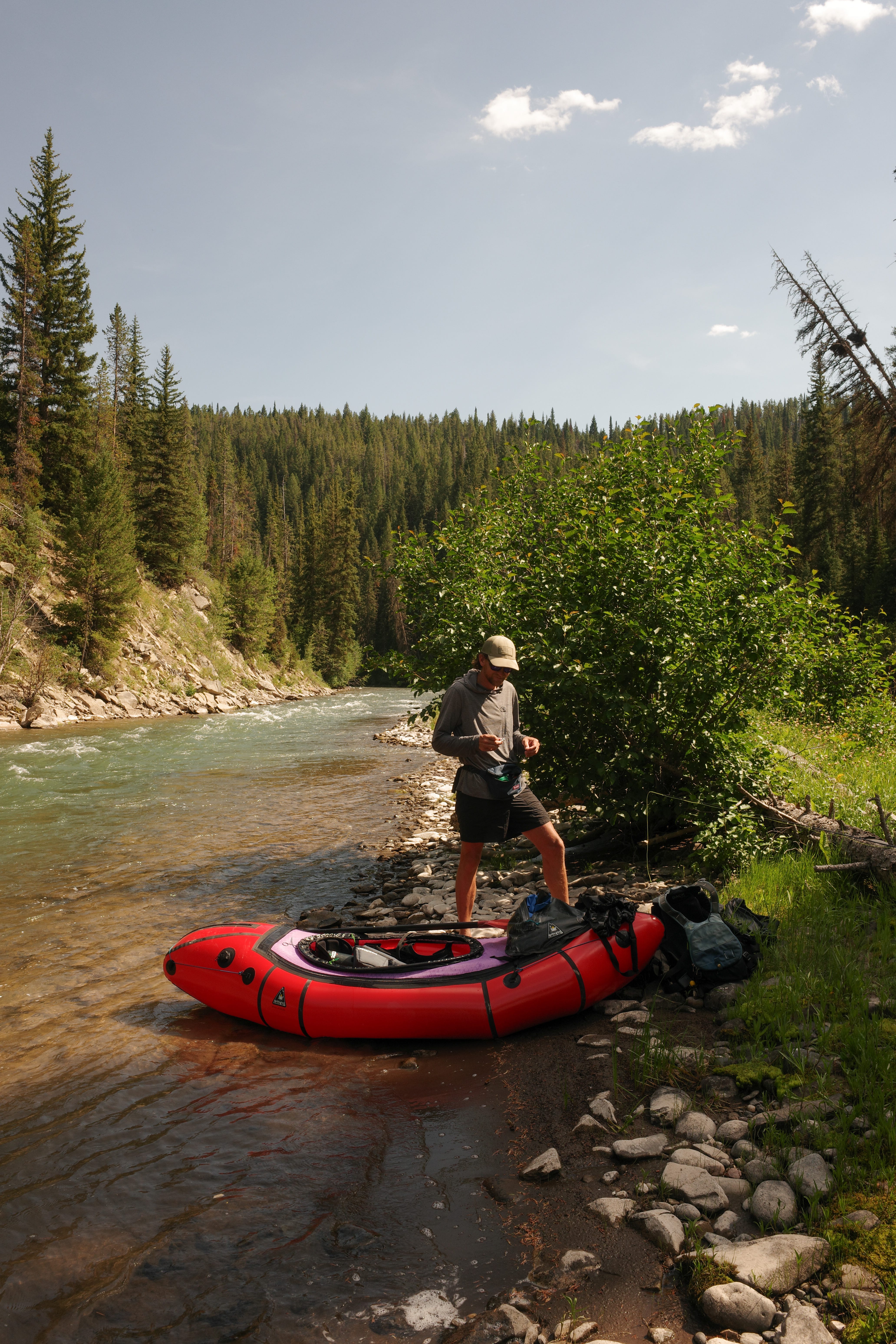
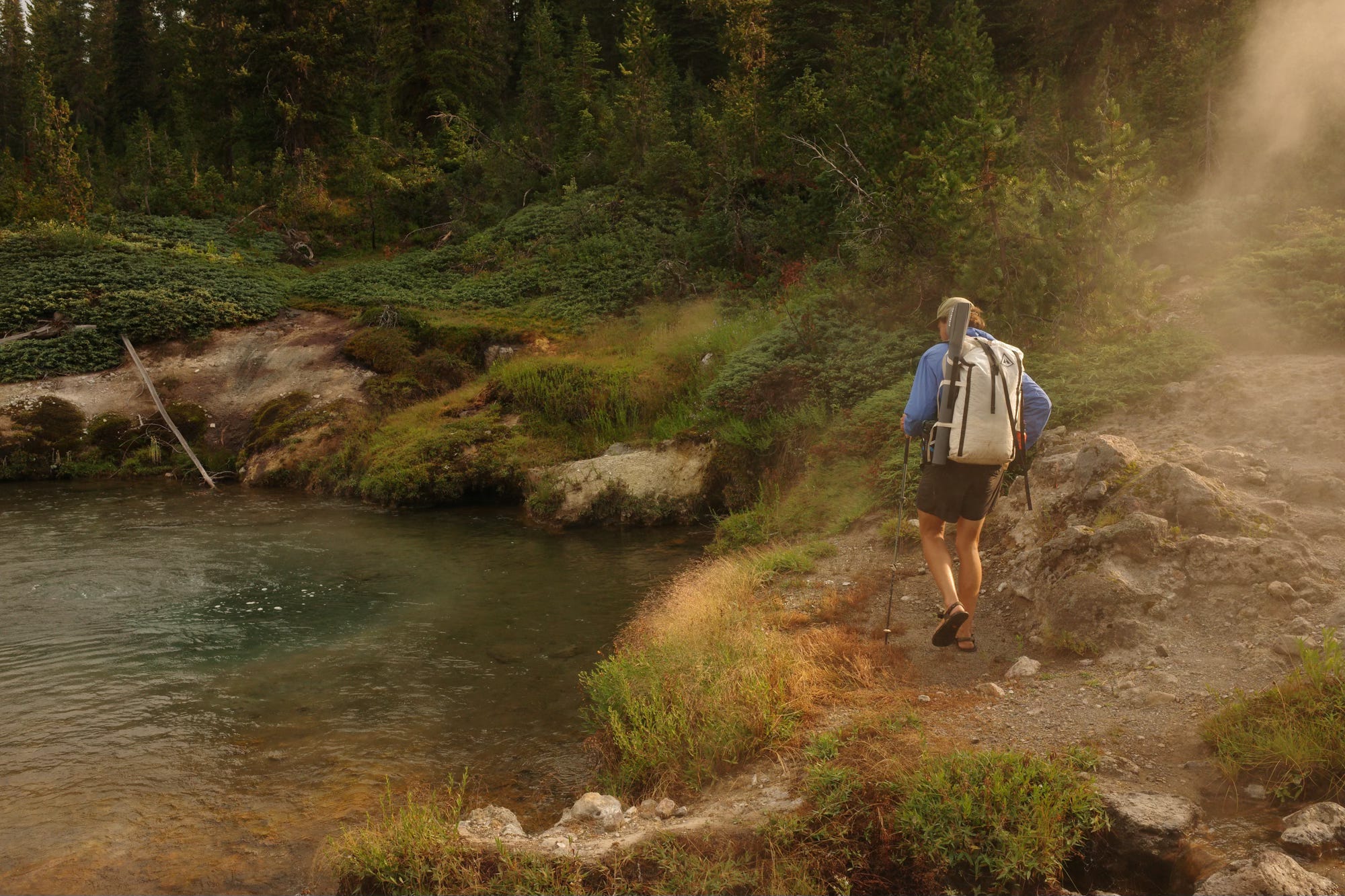
I’m not an advanced planner. I more or less hiked the Appalachian Trail on a whim with no backpacking experience and haven’t really changed a decade later. So I never, ever remember to book Bechler backpacking permits far enough in advance and each summer I find myself in the same irritating situation. Until this year!
Years ago, several friends put together and hiked two different lengthy traverses of the Greater Yellowstone Ecosystem. One of their favorite sections was the Bechler River and it has been on my radar ever since. The river runs through Yellowstone’s less-visited southwestern corner. It’s full of waterfalls and has a reputation for the most hellish bugs in the park, paired with some deep fords if you go too early.
Through slim pickings I managed to cobble together a three day itinerary from Lone Star Geyser to Grassy Lake Trailhead. The Bechler Ranger Station is a shorter alternative that most people take, but Grassy Lake was more convenient for us on the other side of the Tetons.


The first day consisted of my favorite backcountry geyser, lodgepoles, and open meadows. We passed a few northbound CDT hikers where the trails overlapped near Shoshone Lake, a section I remember as being full of sneaky mud pits and a strainer in the flooded Moose Creek that nearly drowned me. The Yellowstone part of the CDT is shockingly unremarkable, but I have a lot of nostalgia for that time, not selling people things with my words to keep them distracted while everything burns around us. But I then remember the countless days of walking through a sagebrush field or old burn area while the 3:00pm sun beats through my shirt, horseflies bite my calves, and pebbles from the horse-trampled trails worm into my shoes.
Maybe I don’t miss that?
We camped at 9D2 that night on the Gregg Fork, which joins the Ferris Fork and Phillips Fork at one large confluence to make the Bechler. The sites in Yellowstone are odd for such a strict, bureaucratic park. They break every LNT and bear safety practice I’ve ever known, with tent spots on the edge of the water and the food hang pole right in camp. Our second campsite on the Bechler River didn’t even have anywhere to actually camp, just a flat dirt space beneath the food pole and a campfire full of foil.
Not surprisingly, the trees around that camp were full of bear scratches.
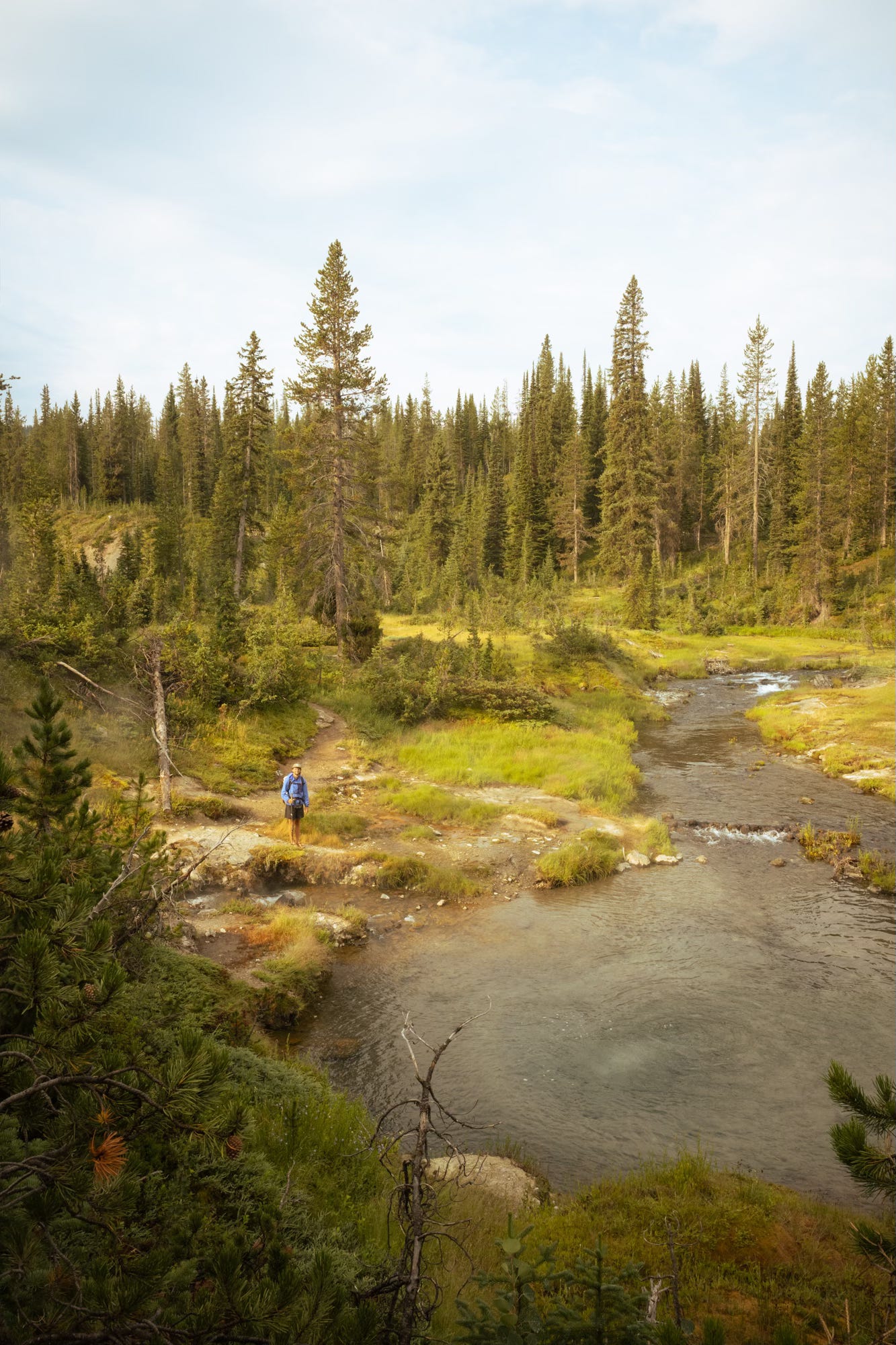
We hit the hot spring the following morning. A cold and a boiling creek meet to form a large pool with a bubbling feature at the center. Tiny bubbles burst out of the hot sand sporadically, hence the creative name Mr Bubbles. The water was hot on the surface but too cold just a few inches below; any time we dug our fingers into the sand we’d wheel them back in pain from all of the heat just beneath the grains. It was a weird hot spring experience but all of my friends had an easier time at Mr Bubbles, so morning may just be the wrong time to go.


We followed the Bechler River the rest of the day past huge falls, thermal features, and so many berry patches. This area is called Treasure Island for a reason and in retrospect this is the place to camp. I even spotted two massive bull moose, which are a pretty special thing to see in Yellowstone because there are only 200 moose in the park.
The canyon spits you out into the Bechler Meadows, a broad and lovely yet nightmarishly buggy field. Sandhill Crane calls occasionally drowned out the drone of the mosquitos in our ears. You can see the backside of the Tetons in the distance and the temperature instantly shoots up, welcoming you to Idaho. If sites were available, it would have been worthwhile to detour the eight extra miles to Dunanda Falls from here.
Gabe fished the Bechler River at camp, which I read was “full of the smartest and biggest fish you’ll ever try to catch.” It’s not. The cutthroat were a beautiful green I’ve never seen before but very difficult to catch because of their tiny size, not wit. This is the place for a Tenkara.


The next morning, we forded the Bechler and left it behind. Bear tracks led the way through dry meadows, beaver dam floods, and horse-chewed trails back into the mountains. This terrain felt like the most grizzly-loaded of the trip, with broad sage fields and forests just like our grizz town home, Colter Bay.
Since I didn’t get to see Dunanda Falls, we added the four extra miles to Union Falls, the second largest waterfall in the park. I’ve never explored any of the hikes on Grassy Lake Road before and now I wonder what I’ve been doing all these years. The campsites are large and duffy and Union Falls is a neat confluence of two creeks, but the real gem is the less-visited Morning Falls, a small waterfall with a deep pool that is thermally-heated to the most perfect swimming temp. I didn’t get to spend enough time there so I’m desperate to snag a permit to go back.
We slogged through the heat of the Idaho afternoon on an exposed western slope. As with everywhere, this summer has been concerningly hot by a significant margin. As the day grew late, we crossed and cooled off in the Fall River, which I’ve always wanted to see as one of the more fun and remote whitewater rivers on the Teton Valley side.
This was the trip I needed to change my mind about Yellowstone. In a lot of ways it has nothing on the surrounding Beartooth, Absaroka, Teton, and Wind River mountains, yet I’m still pouring through my friends’ gpx files to plan a trip into the Lamar Valley. It turns out that Yellowstone is a little miserable as a driving park but fascinating the minute you go a little deeper.


Writing
Reading
Yesteryear - Caro Claire Burke
American Wolf - Nate Blakeslee
A Few Things I Love Right Now
This mulberry spray skirt Gaeb sewed for his packraft